
WELCOME BONUS 300%
UP TO €2000 + 100
FREE SPINS
UP TO €2000 + 100
FREE SPINS
Home → Games
Casino games at neon54
Video Poker: check payout table before betting
Video Poker Jacks or Better 8/5 offers a Return to Player (RTP) of 97.29%, with a house edge of 2.71%. This specific payout structure, where a Full House pays 8 coins and a Flush pays 5, results in this RTP, a notable figure in the video poker landscape.
Compared to a 9/6 Jacks or Better variant which boasts a 99.54% RTP, the 8/5 version is at a disadvantage. A reduction of only two payout units for a Full House and Flush costs 2.25 percentage points of RTP, demonstrating how crucial payout tables are.
Understanding these payout differences is vital for players aiming to maximise their potential returns. For instance, playing a 9/6 variant instead of an 8/5 with optimal strategy could theoretically lead to significantly higher winnings over extended play.
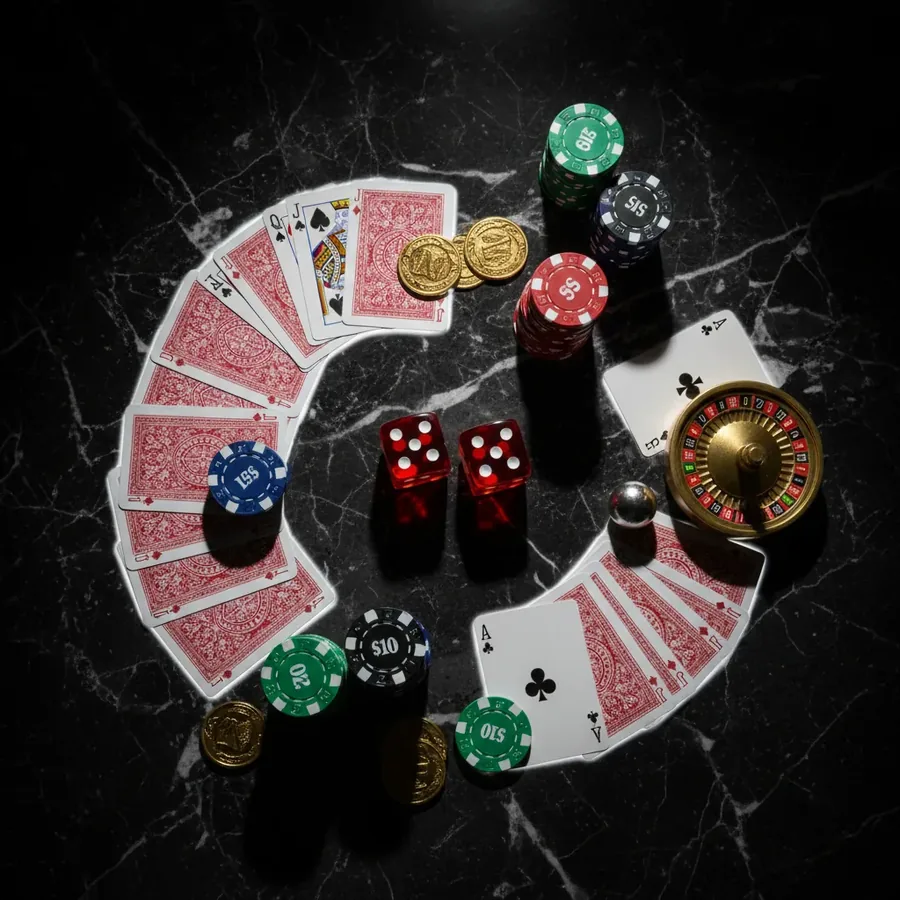
Sic Bo Pays from 1:1 to 180:1
Sic Bo features a wide array of betting options, with payouts ranging significantly. The Specific Triple bet offers an impressive 180:1 payout, presenting a substantial potential reward for a single outcome.
However, this high payout comes with a considerable risk, as the house edge for a Specific Triple bet is 16.20%. The Single Number bet, conversely, is the most favourable special bet with a house edge of 7.87%.
Players should carefully consider the trade-offs between potential winnings and the house edge. While the 180:1 payout on a Specific Triple is enticing, the Single Number bet provides a more statistically advantageous position for the player.
100 EUR bet, 50 rounds: the expected value
If a player bets 100 EUR per round for 50 rounds, the total wagered amount reaches 5,000 EUR. Considering a game with a Return to Player (RTP) of 97.30%, such as European Roulette, the expected return to the player over this duration is 4,865 EUR.
This calculation highlights the house edge in action; the difference between the total wagered and the expected return represents the average amount the casino expects to retain. In this scenario, the expected retention is 135 EUR (5,000 EUR - 4,865 EUR).
The expected value provides a theoretical long-term outlook and is not a guarantee of individual session outcomes. For European Roulette with its 2.70% house edge, this means that on average, a player can expect to lose 2.70% of their total bets over time.
How Much Does One Mistake Cost in 100 Hands?
A single strategic error in Blackjack can have a tangible impact on a player's theoretical return. For instance, playing with a 6 Deck, S17, DAS, DOA, 3:2 payout game under basic strategy yields an RTP of 99.54%, indicating a house edge of 0.46%.
If a player deviates from this optimal strategy, the house edge can increase. For example, if the dealer Hits Soft 17 instead of standing, it increases the house edge by 0.22 percentage points, bringing the RTP down to 99.32%.
This means that over 100 hands, each costing 10 EUR, a single rule variation that increases the house edge by 0.22% could theoretically result in an additional loss of approximately 2.20 EUR (100 hands * 10 EUR/hand * 0.0022 house edge increase).
Pass Line in Craps: Process in Four Steps
The Pass Line bet in Craps involves a specific sequence of events to determine its outcome. Initially, a player places a bet on the Pass Line area of the table before the come-out roll.
On the come-out roll, if a 7 or 11 is rolled, the Pass Line bet wins immediately. If a 2, 3, or 12 is rolled, the Pass Line bet loses. If any other number (4, 5, 6, 8, 9, or 10) is rolled, that number becomes the 'point'.
Once a point is established, the shooter continues to roll the dice. The Pass Line bet wins if the point is rolled again before a 7. If a 7 is rolled before the point, the Pass Line bet loses. This game offers a Return to Player of 98.59%.
Game categories at a glance
| Category | Examples | Stakes From | Highlight |
|---|---|---|---|
| Slots | Gonzo's Quest, Temple Tumble Megaways, Book of Demi Gods 2 | 0,10 EUR | thousands of titles |
| Table games | Roulette, Blackjack, Baccarat | 0,50 EUR | classic rules |
| Live casino | Quantum Roulette, MONOPOLY Live | 0,20 EUR | real dealers |
| Jackpot games | Mega Moolah, Divine Fortune, Age of the Gods | 0,20 EUR | progressive pools |
| Instant games | Aviator, Plinko, Mines | 0,10 EUR | fast rounds |
| Video poker | Jacks or Better, Deuces Wild | 0,25 EUR | strategy based |
Connection Lost in Table Game: Round Continues Automatically
If a player's connection is interrupted during a table game at neon54, the round will continue automatically without manual intervention. This ensures fairness and prevents players from being disadvantaged due to technical issues. The game state is maintained, and subsequent actions are processed according to the rules.
For example, in Roulette Amerikanisch with its 5.26% house edge, an ongoing spin would be resolved based on the ball's final position. Similarly, in Craps, bets would be settled according to the dice roll outcome, irrespective of the player's connection status.
This feature is designed to protect player funds and maintain the integrity of gameplay, allowing for a continuous gaming session even with intermittent connectivity. Players can resume their session once their connection is restored, with all outcomes accurately reflected.
Splitting in Blackjack: one hand becomes two
Blackjack rules at neon54 often permit splitting pairs, a strategic move where a hand containing two cards of the same rank is divided into two separate hands. This action allows players to potentially improve their odds by playing two independent hands against the dealer. For instance, splitting Aces can lead to improved outcomes, especially when combined with specific game rules.
Specific rule modifications, such as Resplit Aces (RSA), can enhance the player's RTP by approximately 0.08 percentage points. This contrasts with situations where RSA is not permitted, offering a tangible benefit to players who can utilize this option. The ability to split can transform a weak starting hand into two potentially stronger ones.
While splitting is a powerful tool, its effectiveness is tied to the overall game conditions, including the number of decks and payout rules. Understanding these nuances, such as the impact of Dealer Hits Soft 17 (H17) which adds 0.22 percentage points to the house edge, is crucial for optimal play.
Punto Banco: 5 Percent Commission on Banker Wins
In Baccarat, specifically the Punto Banco variant played at neon54, bets placed on the Banker hand are subject to a 5% commission on winning bets. This commission is a standard feature that slightly adjusts the payout, ensuring the house retains an edge. The Banker bet, despite this commission, remains one of the most favourable wagers in the game.
The RTP for the Baccarat Banker bet is 98.94%, with a resulting house edge of 1.06%. This figure reflects the deduction of the 5% commission from winning Banker hands. For comparison, the Baccarat Tie bet carries a significantly higher house edge of 14.36%, making it a less advisable option for players.
The effective payout for a winning Banker bet is 0.95:1, meaning a €10 winning bet would return €19 (€10 stake + €9 winnings). This structure is fundamental to the mathematical design of Baccarat, balancing the Banker's statistical advantage in drawing the third card with the commission applied.
Read Statistics of Last 500 Rounds Correctly
Analyzing the statistics of the last 500 rounds in games like European Roulette can offer insights into game behaviour, although it does not guarantee future outcomes. European Roulette, with its 37 sectors and 2.70% house edge, provides a consistent mathematical advantage to the casino on all bets. For example, a Straight bet pays 35:1.
Understanding the RTP of different games is crucial for informed play. Video Poker Deuces Wild — Full Pay boasts an exceptional RTP of 100.76%, offering a positive expected value for players employing optimal strategy. This is a rare instance where the RTP exceeds 100%, a stark contrast to games with higher house edges.
For instance, Sic Bo's specific bets, such as the Specific Double, have a substantial house edge ranging up to 18.52%. Recognizing these figures allows players to identify games and bets that align with their risk tolerance and strategic objectives, ensuring they are playing with awareness of the underlying probabilities.
Dozen 2:1: Twelve Numbers, One Third Coverage
In Roulette, betting on a Dozen covers twelve specific numbers and pays out at odds of 2:1. This bet represents approximately one-third of the available numbers on the wheel, excluding the zero(s). For example, betting on the first dozen (1-12) pays €2 for every €1 wagered if any of those numbers hit.
This 2:1 payout structure is consistent across both American and European Roulette wheels, although the house edge differs. European Roulette, with a single zero and a 2.70% house edge, offers better odds than American Roulette. American Roulette, featuring both 0 and 00, has a higher house edge of 5.26%.
The mathematical expectation for a Dozen bet in European Roulette, given its 2:1 payout and 37 possible outcomes, results in a constant house edge. Unlike some other bets, the Dozen bet does not offer variable RTP based on external factors, providing a predictable statistical framework for players.
Straight 35:1 Against the Chance of 1 in 37
A straight bet on a single number in European Roulette, which features 37 sectors including a single zero, pays 35 to 1. This payout structure means the house edge is a consistent 2.70%. For example, a 1€ bet that wins returns 35€ plus the original stake.
This inherent edge applies across all bet types on the European wheel, from red/black bets paying 1:1 to dozen bets paying 2:1. Unlike American Roulette, where the double zero increases the house edge, the European version offers a more balanced game. The RTP for European Roulette stands at 97.30%.
For players, this translates to a predictable mathematical disadvantage per round. Over extensive play, approximately 2.70% of all wagers are expected to be retained by the casino. This consistent edge makes understanding the game's mechanics crucial for any player.
En Prison on Zero Gives Second Chance
Certain Roulette variants may offer an 'En Prison' rule, especially when the ball lands on zero, providing a second chance for even-money bets. This rule effectively means the stake is 'imprisoned' for the next spin, rather than immediately lost. It is a rule that modifies the standard payout structure.
The advantage of 'En Prison' can significantly reduce the house edge on even-money bets, as it offers a partial refund or a re-bet opportunity. For instance, a typical European Roulette RTP is 97.30%.
If this rule were applied, it would directly impact the 1:1 payout bets like red/black or odd/even. The benefit to the player is a reduction in the overall house advantage, making these specific bets more favorable in the long run. This rule is a key differentiator in some game variations.
RNG Roulette vs. Live Table: Four Clear Differences
Roulette games operate on Random Number Generators (RNG) or are hosted by live dealers, presenting distinct gameplay characteristics. RNG tables, like standard European Roulette with a 97.30% RTP and 2.70% house edge, rely on algorithms for outcomes. Live tables offer a more tangible, real-time experience.
The number of sectors on the wheel is a critical factor, with European Roulette having 37 sectors and American Roulette featuring 38 due to a double zero. This difference directly impacts the house edge, which is 5.26% on American Roulette compared to 2.70% on its European counterpart. The RTP for American Roulette is 94.74%.
Payouts can also vary, although standard bets like a 35:1 straight-up bet are generally consistent. However, the speed of play and the presence of side bets or special rules, such as 'En Prison' or 'La Partage', can differ significantly between RNG and live dealer environments. Side bets are often excluded from bonus wagering contributions.
Keno and Bingo with RTP Between 92 and 95
Games like Keno and Bingo typically exhibit a lower Return to Player (RTP) compared to many table games. Specific Keno variants can have an RTP ranging from 92.13% to as low as 81.48%, depending on the betting structure. This means the house edge can be substantial, from 7.87% to 18.52%.
For instance, a 'Single Number' bet in Sic Bo, a game with similar probability mechanics to Keno, offers the best special bet with an 7.87% house edge. Conversely, a 'Specific Double' bet in Sic Bo carries a much higher house advantage of 18.52%. These figures highlight the variance within these lottery-style games.
When considering these games, players should be aware of the significant house edge. While they offer a different type of entertainment, the mathematical disadvantage is generally greater than in games like Blackjack or Roulette. The RTP of 97.30% for European Roulette, for example, far surpasses the typical RTP for Keno or Bingo.
37 vs. 38 Sectors: What the Double Zero Costs
The fundamental difference between European and American Roulette lies in the number of sectors on the wheel, with European Roulette featuring 37 sectors and American Roulette having 38. The addition of a double zero (00) in American Roulette directly inflates the house edge.
This extra '00' sector increases the house advantage to 5.26% in American Roulette, significantly higher than the 2.70% found in European Roulette. Consequently, the RTP for American Roulette is 94.74%, a substantial drop from the 97.30% offered by its European counterpart. This difference is critical for player returns.
For example, a straight-up bet on American Roulette, despite paying the same 35:1 as on the European wheel, is mathematically less favorable. The presence of the double zero means that the odds are stacked more heavily against the player on every single spin, regardless of the bet type.
Contact
Live - online chat
Banking









Providers












Neon54 Casino 2026